As the standardisation for 5G-SA has been completed and the first roll outs are happening, I thought I’d cover the basic architecture of the 5G Core Network, for people with a background in EPC/SAE networks for 4G/LTE, covering the key differences, what’s the same and what’s new.
This posts focuses on the User Plane side of things, there’s a similar post I’ve written here on the Control Plane side of things.
UPF – User Plane Forwarding
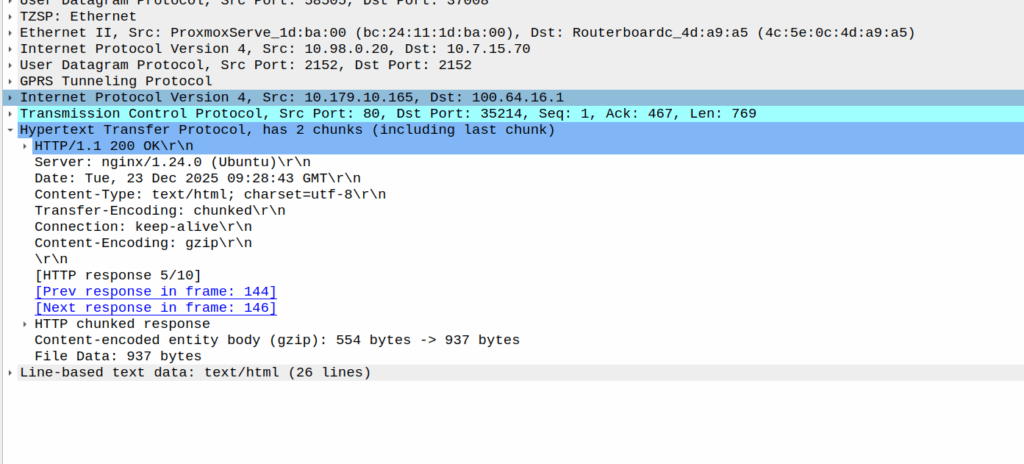
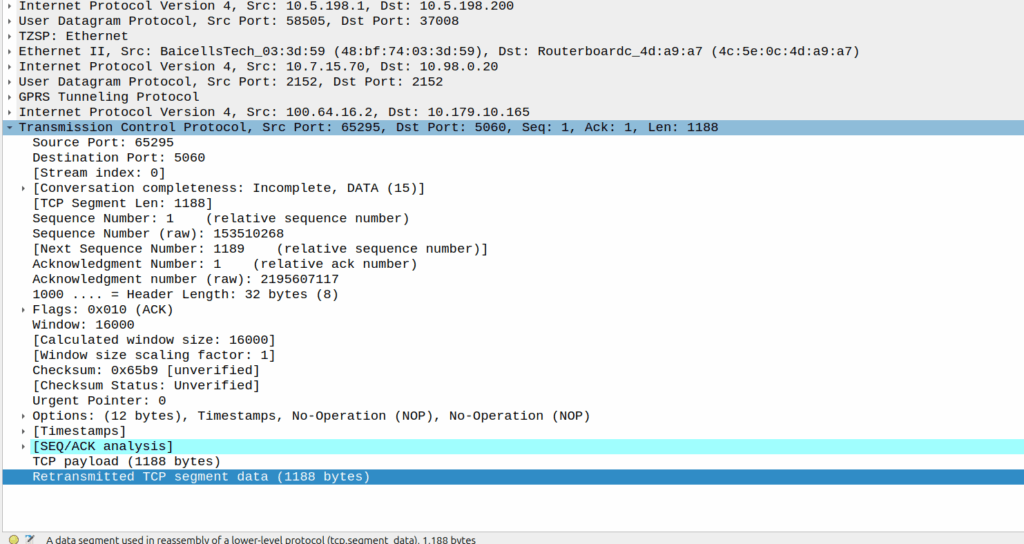
The UPF bridges the external networks (DNs) to the gNodeB serving the UE by encapsulating the traffic into GTP, which has been used in every network since GSM.
Like the P-GW the UPF takes traffic destined to/from external networks and passes it to/from subscribers.
In 5GC these external networks are now referred to as “DN” – Data Networks, instead of by the SGi reference point.
In EPC the Serving-Gateway’s intermediate function of routing traffic to the correct eNB is removed and instead this is all handled by the UPF, along with buffering packets for a subscriber in idle mode.
The idea behind this, is that by removing the S-GW removes extra hops / latency in the network, and allows users to be connected to the best UPF for their needs, typically one located close to the user.
However, there are often scenarios where an intermediate function is required – for example wanting to anchor a session to keep an IP Address allocated to one UPF associated with a user, while they move around the network. In this scenario a UPF can act as an “Session Anchor” (Akin to a P-GW), and pass through “Intermediate UPFs” (Like S-GWs).
Unlike the EPCs architecture, there is no limit to how many I-UPFs can be chained together between the Session Anchoring UPF and the gNB, and this chaining of UPFs allows for some funky routing options.
The UPF is dumb by design. The primary purpose is just to encapsulate traffic destined from external networks to subscribers into GTP-U packets and forward them onto the gNodeB serving that subscriber, and the same in reverse. Do one thing and do it well.
SMF – Session Management Function
So with dumb UPFs we need something smarter to tell them what to do.
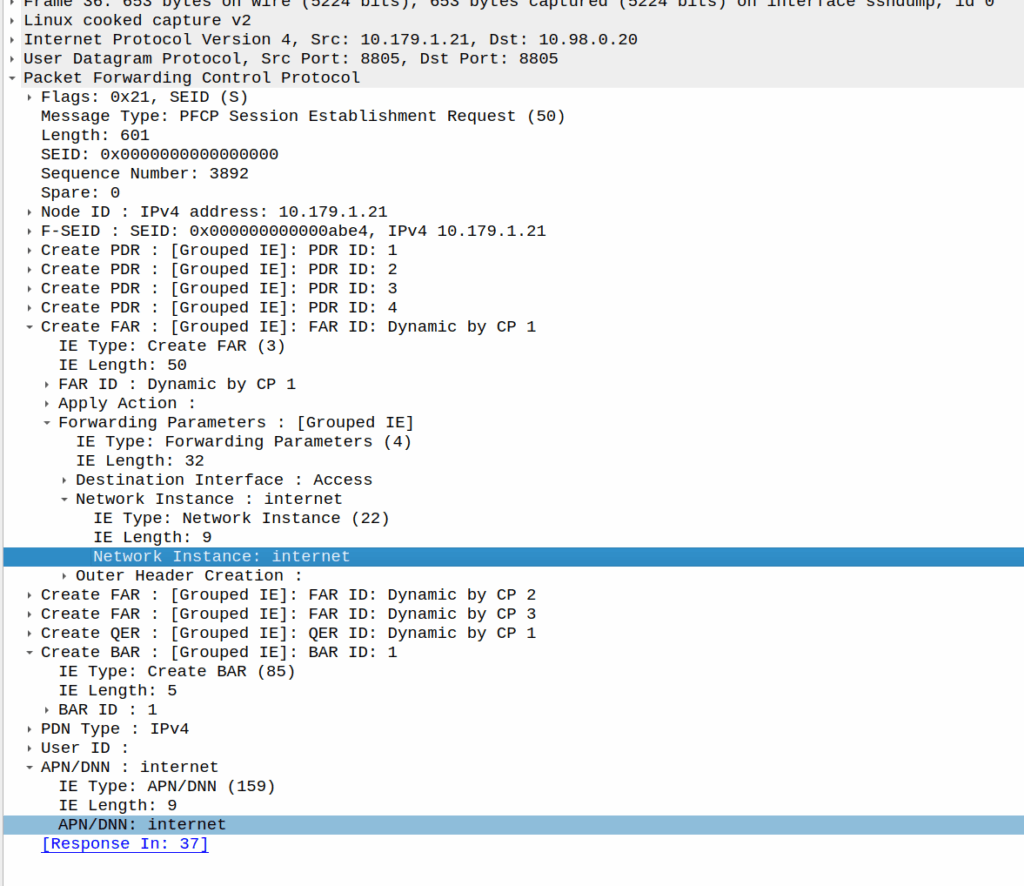
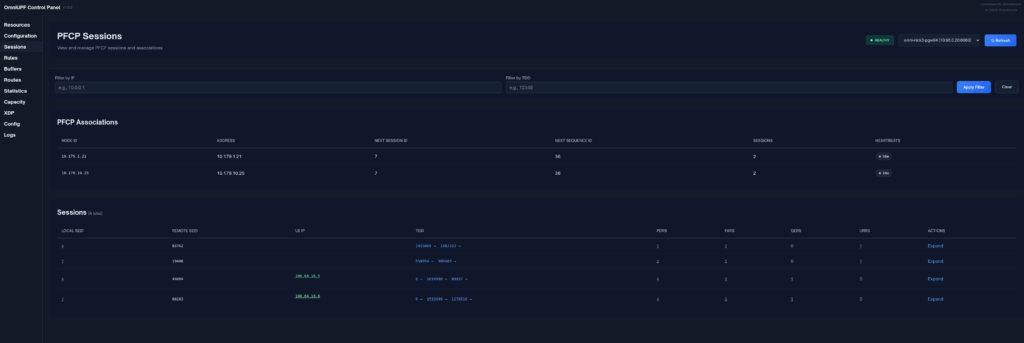
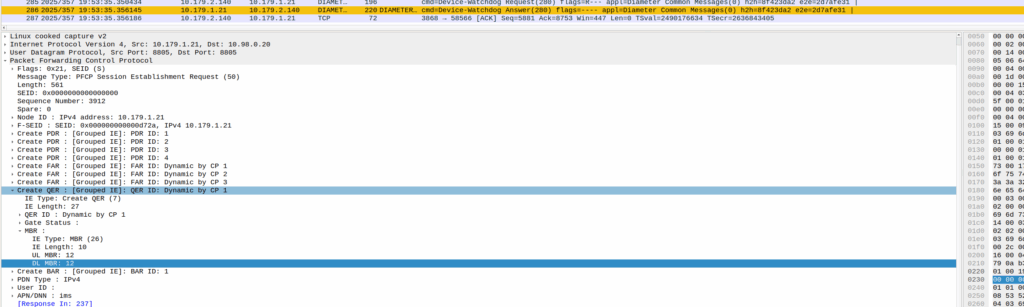
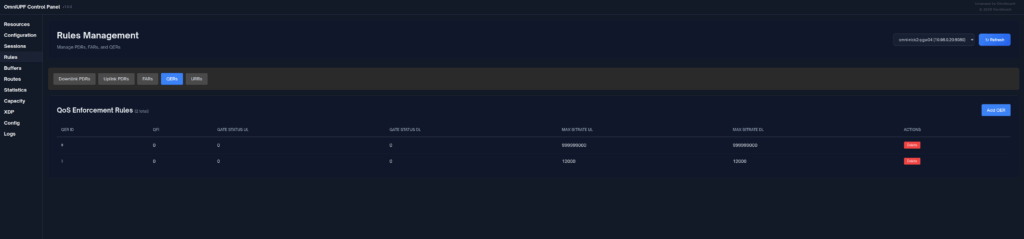
Control of the UPFs is handled by the SMF – Session Management Function, which signals using PFCP down to the UPFs to tell them what to do in terms of setting up connections.
While GTP-U is used for handling user traffic, control plane traffic no longer uses GTPv2-C. Instead 5GC uses PFCP – Packet Forwarding Control Protocol. To get everyone warmed up to Control & User Plane separation 3GPP introduced as seen in CUPS into the EPC architecture in Release 14.
This means the interface between the SMF and UPF (the N4 interface) is more or less the same as the interface between a P-GW-C and a P-GW-U seen in CUPS.
When a subscriber connects to the network and has been authenticated, the AMF (For more info on the AMF see the sister post to this topic covering Control Plane traffic) requests the SMF to setup a connection for the subscriber.
Interworking with EPC
For deployments with an EPC and 5GC interworking between the two is of course required.
This is achieved first through the implementation of CUPS (Control & User Plane Separation) on the EPC, specifically splitting the P-GW into a P-GW-C for handing the Control Plane signalling (GTPv2c) and a P-GW-U for the User Plane traffic encapsulated into GTP.
The P-GW-C and P-GW-U communications using PFCP are essentially the same as the N4 interface (between the SMF and the UPF) so the P-GW-U is able to act as a UPF.
This means handovers between the two RATs / Cores is seamless as when moving from an LTE RAT and EPC to a 5G RAT and 5G Core, the same UPF/P-GW-U is used, and only the Control Plane signalling around it changes.
When moving from LTE to 5G RAT, the P-GW-C is replaced by the SMF,
When moving from 5G RAT to LTE, the SMF is replaced by the P-GW-C.
In both scenarios user plane traffic takes the same exit point to external Data Networks (SGi interface in EPC / N6 interface in 5GC).
Interfaces / Reference Points
N3 Interface
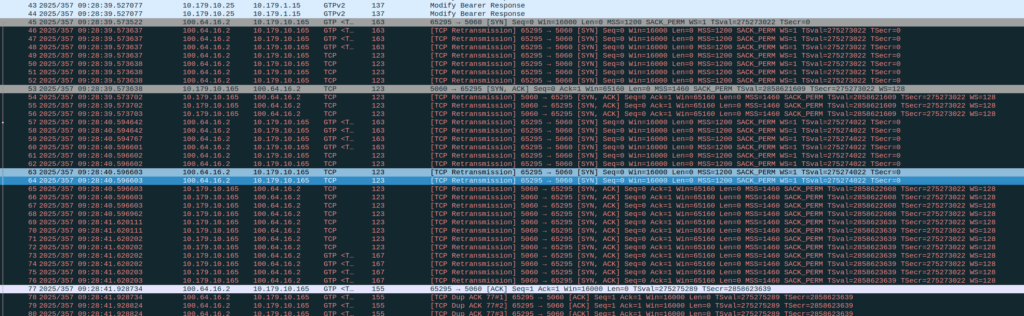
N3 interface connects the gNodeB user plane to the UPF, to transport GTP-U packets.
This is a User Plane interface, and only transports user plane traffic.
This is akin to the S1-UP interface in EPC.
N4 Interface
N4 interface connects the Session Management Function (SMF) control plane to the UPF, to setup, modify and delete UPF sessions.
It is a control plane interface, and does not transport User Plane traffic.
This interface relies on PFCP – Packet Forwarding Control Protocol.
This is akin to the SxB interface in EPC with CUPS.
N6 Interface
N6 interface connects the UPF to External Data Networks (DNs), taking packets destined for Subscribers and encapsulating them into GTP-U packets.
This is a User Plane interface, and only transports user plane traffic.
This is akin to the SGi interface in EPC.
N9 Interface
When Session Anchoring is used, and Intermediate-UPFs are used, the connection between these UPFs uses the N9 interface.
This is only used in certain scenarios – the preference is generally to avoid unnecessary hops, so Intermediate-UPF usage is to be avoided where possible.
As this is a User Plane interface, it only transports user plane traffic.
When used this would be akin to the S5 interface in EPC.
N11 Interface
SMFs need to be told when to setup / tear down connections, this information comes from the AMF via the N11 interface.
As this is a Control Plane interface, it only transports control plane traffic.
This is similar to the S11 interface between the MME and the S-GW in EPC, however it would be more like the S11 if the S11 terminated on the P-GW.